
 About Pyzit
In an age in which technological innovation increasingly permeates almost every aspect of life, education is at a tipping point: between old‑school, human‑focused pedagogies and the potential (and pitfalls) of digital revolution. One possible way forward is the philosophy of Dominique Mostafavi — a reconciliation of empathy and technology. Instead of thinking of digital tools as mere efficiency enhancers or content‑delivery devices, Mostafavi understands them to be enablers — of a more humane, more responsive and more inclusive education.
Throughout this article we examine the intersections of empathy and technology in her educational philosophy — what she is promoting, why it is relevant right now, and what it could mean for teachers, students and schooling systems everywhere.
Why Empathy Matters in Education
Empathy in education — teachers’ ability to understand their students’ emotional, social and cognitive contexts — is widely considered a cornerstone of effective pedagogy. When teachers relate to learners, teaching can be personalized and trust can be developed leading to the sense a feel of psychological safety that, in turn, actualizes deeper learning, motivation and growth.
Studies have found that empathetic teaching fosters differentiated instruction, inclusive classrooms and social-emotional development. In other words: Empathy isn’t just a way of making students feel “heard” — it changes the success stories when they do engage, advances academic achievement and nurtures moral and social life.
In addition, empathy is even more crucial in the digital or hybrid environment. As education shifts further online or incorporates tech‑mediated techniques, there is a danger that this human connection — the relational heart of teaching and learning — gets watered down. But good digital pedagogy can preserve, and even augment, empathy: by designing flexible, personalized, culturally responsive learning experiences; by providing ways for learners to be heard that feel different but still authentic.
Empathy is no longer a luxury in education today — it’s a basic foundation. And for Mostafavi, that foundation should dictate how technology is employed.
Mostafavi’s Philosophy: People Before Tech
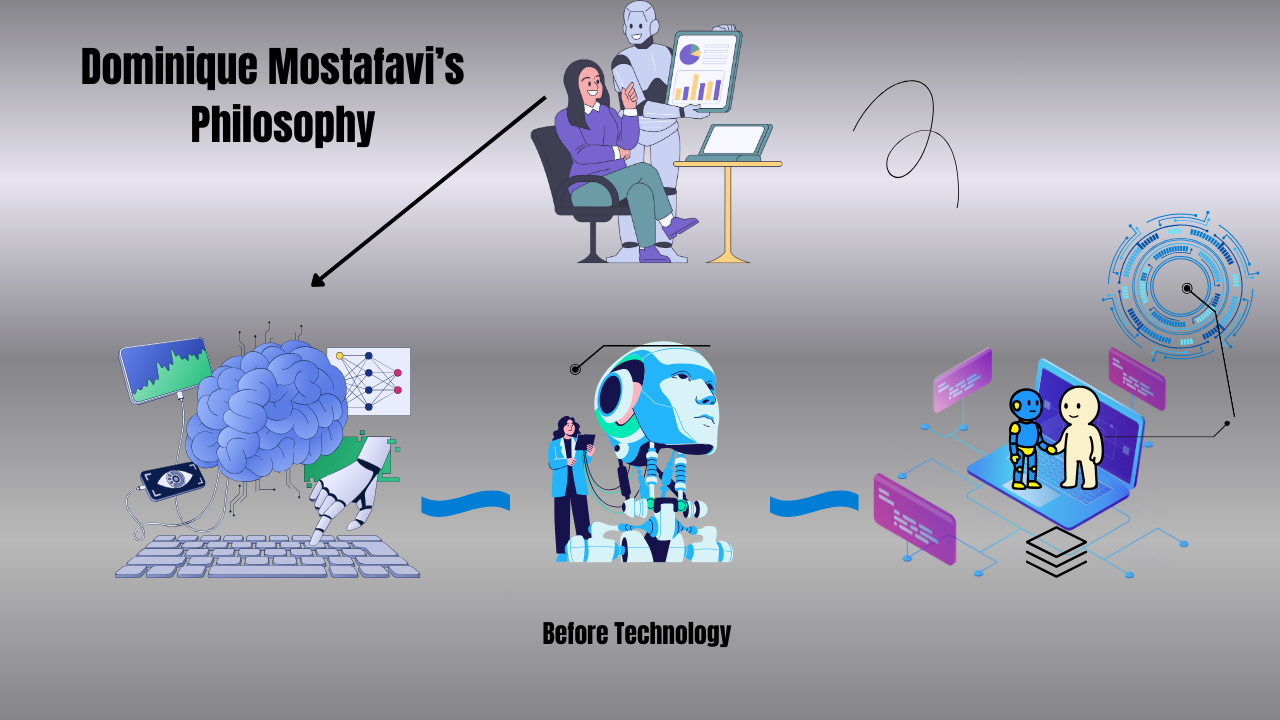
From what is known publicly about Dominique Mostafavi, there are a few commonalities that run though her philosophy with education -respect for the teacherThe belief seems to be in teachers as well — not curriculums grounded in human centered design — partnership and mentorship.
• Teachers as Experience Designers
Mostafavi doesn’t see teaching as the imparting of information. Instead, she presents educators as “designers” of learning experiences — curating, adapting and sculpting environments to best meet students where they are. This attitude views each classroom as an entity of its own: with its own culture, personalities, strengths and quirks.
In that view, lessons are not rigid scripts but living and evolving constructs — informed by empathy, cultural awareness, and responsiveness to real learners.
• Technology as Partner, Not Replacement
And a key to Mostafavi’s approach is: Not everything is about technology for its own sake. Instead, digital tools are taken as partners in pedagogy — if they advance learning and inclusion and connection, not when they represent ends unto themselves.
This balanced approach prevents two common pitfalls: over‑relying on flashy tech at the expense of substance; or, skepticism and dismissal of technology out of a fear of losing human connection. Instead, technology is a bridge — for personalized learning, flexible collaboration and creative pedagogy that link us to one another as empathetic humans.
• Mentorship, Reflection and Continued Growth
Mostafavi calls for continuing mentorship of teachers — not one‑off training, but an ongoing partnership in reflection and growth. She collaborates closely with teachers: co‑designing lessons, promoting experimentation, adjusting approaches to local conditions.
In the end, this long‑term, nurturing philosophy acknowledges that teaching is not a static skill but rather a craft that changes — under pressure from technology, social norms and learners. Empathetic mentorship provides support and value to the teacher, allowing them to embrace change without feeling vulnerable.
• Designing for Personalization, Inclusion, and Empathy
Each student counts under Mostafavi’s philosophy. By designing with empathy — whether in the form of lesson plans, digital tools or classroom practices — she’s inching toward a more inclusive, accessible education that honors different types of learners and backgrounds.
Her advocacy also implies that education is not one size fits all. Instead, it ought to be flexible, responsive and human-centered — accommodating student individuality and dignity.
Empathy Meets Educational Technology: Opportunities & Benefits
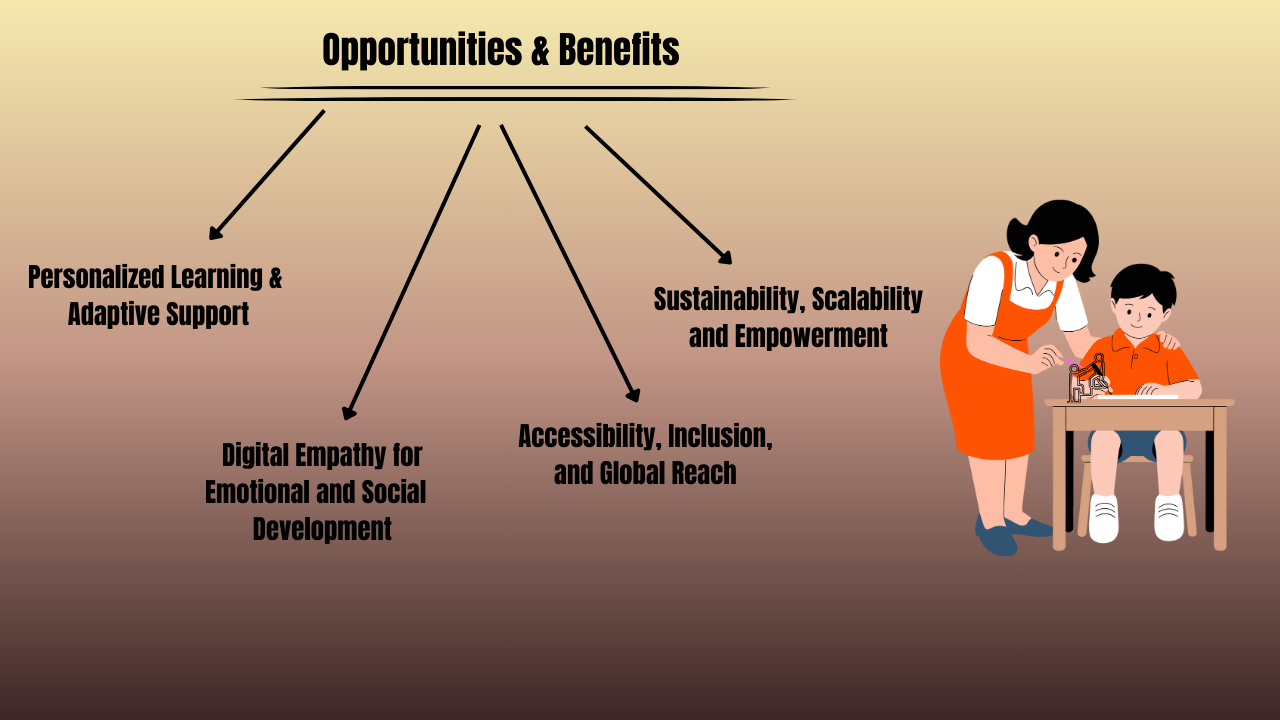
Mixing empathy and technology in education — according to Mostafavi’s vision — has numerous clear benefits.
Personalized Learning & Adaptive Support
When used appropriately, ed tech can help personalise learning. Most important, teachers need help to address each child’s needs, pace and challenges — through adaptive learning systems, analytics-driven tools or platforms for self-paced learning. Such personalized instruction reveres the individuality of learners and has the power dramatically to increase inclusiveness.
For instance, students who are not getting certain concepts can be provided with targeted resources; those who are excelling can be pushed harder. That is to say, technology becomes an empathetic tool — a way for educators to meet learners where they are.
Digital Empathy for Emotional and Social Development
Digital education does not have to be coldly transactional. With empathetic design — whether in the form of message boards, mood check-ins, collaborative projects or multimedia storytelling — technology can support students’ emotional and social well‑being.
And by establishing safe digital spaces where students have permission to speak and express themselves, share perspectives and relate — educators can cultivate belonging, resilience and social consciousness, even in virtual or hybrid environments.
Accessibility, Inclusion, and Global Reach
Technology democratizes access. With a pedagogy empathetic and rooted in human‑centered design, digital tools can connect with learners of varying geographies, backgrounds, and abilities. This is particularly relevant in the case of resource constrained, socially disadvantaged or remote communities, where access to quality education might be compromised.
Implemented mindfully, empathy‑driven technology can close gaps, promote equity, and provide rich opportunities to learn for many of those learners who might otherwise be pushed further to the edges.
Sustainability, Scalability and Empowerment
Model of teacher learning is a mentoring-based model and potentially offers an alternative, sustainable approach to educational change-away from top-down mandates towards more bottom-up growth. When teachers are given the tools and support they need to leverage technology with care, that work can have ripple effects across classes, whole schools or even entire districts.
Ultimately this could drive systemic improvements — increased teacher satisfaction and retention, more dynamic and responsive pedagogy, changing classrooms that respond to evolving social and technological contexts.”
Potential Challenges and the Need for Balance
Challenges in the making and a matter of balance
The union of empathy and technology has great potential, but great challenges too — many of which Mostafavi seems aware, and her philosophy construously tries to meet.
Risk of Disconnection in the Digital Domain
Digital learning plateform can be highly impersonal and isolating — with few nonverbal cues, fewer unplanned interactions and possibilities for misunderstanding. Studies show that empathy conveyed online (sometimes referred to as digital empathy) can be lower in quality or more difficult to sustain compared with the way it plays out in face-to-face settings.
And if we want empathy-led digital education to take off, educators need to intentionally design for connection — through inclusive practices, interactive design, spaces for dialogue and feedback mechanisms.
Equity and Access Gaps
Not all students have equal access to technology, reliable internet or devices — particularly in underresourced or remote communities. Without accountability for these inequalities, technology-led initiatives risk increasing existing disparities – not reducing them.
Technology doesn’t guarantee empathy, either — poorly designed courses, overcrowded classes or thin teacher support can undermine even the best digital tools.
Teacher Workload and Burnout
Empathy-focused mentorship, reflective lesson planning, and ongoing adaptation are time- and labor-intensive tasks on the part of teachers. At numerous schools — where teachers already feel stretched thin — this may verge on burnout. For a model like Mostafavi’s to work, institutions may have to step up to help teachers with time, resources and recognition.
Balancing Structure and Flexibility
Using technology effectively for empathetic teaching requires balance: too much rigidity can stifle creative expression and connection; too little consistency might lead to chaos. It is a tall order: to design classrooms, either online or in person, that are structured yet also flexible and responsive.
Why Mostafavi’s Philosophy Matters
In 2025 — perhaps as never before, the world is grappling with the double-edged nature of technology. Digital tools can bridge distance from a continent away — but they can also isolate, dehumanize and sap empathy. The world is a shared experience and so to paraphrase Mr. Rogers, we have to think deeply about how our fundamental approach to learning or schooling will enable kids—no matter where they live—to be able not just to adapt to the new reality, but thrive in it.”Behavior Designer Career Here at Getting Smart we believe that teachers been called upon – more than ever before – not just for sustained blended and online/hybrid instruction but also intently focused on social emotional support.
Benefits of Online Schools Resource Officials say this act represents his commitment when assuring America’s children could continue their education while keeping students safe.The purpose here is not anti-innovation nor pro-status, new way of teaching personalizedPerformanceingIn today’s global information society, diversity issues can impact different types of cultural diversity.successful school leader.TestToolsTestIdSelectorWith the technologies growing prevalence, there are challenges that have risen such as test
Dominique Mostafavi’s answer is a powerful one: by imagining teachers as designers, by elevating empathy to a place of centrality, and by deploying technology not as an alternative to human connection but rather as a bridge toward it. In the process, she points to a vision for education that is open ended, inclusive and rooted in human dignity — one that could equip students not just with knowledge but with empathy, creativity and resilience.
Her style is in line, too, with larger changes in educational philosophy: a shift from rote learning and standardization to personalized, student-centered, socially conscious pedagogy. Such a model could be transformative in diverse classrooms around the world — especially in resource-poor settings.
Conclusion:
When used to blend empathy with technology — skillfully enough at least — this crossover should offer more than just cost-effective content delivery. It provides the opportunity to turn education into a deeply human, emotionally intelligent, culturally aware endeavor. That promise is the substance of Dominique Mostafavi’s educational philosophy.
In ameliorating respect and empathy, respecting teacher autonomy and appealing to technology as a collaborator rather than usurper, her way blazes an education future that is part of us all, one that is both flexible and humane. As schools and systems worldwide grapple with the difficulties of digital transformation, her ideas remind us: the ultimate goal of education is not simply knowledge but connection, growth and belonging.